
What does your skin want this spring? Proper exfoliation and regeneration.
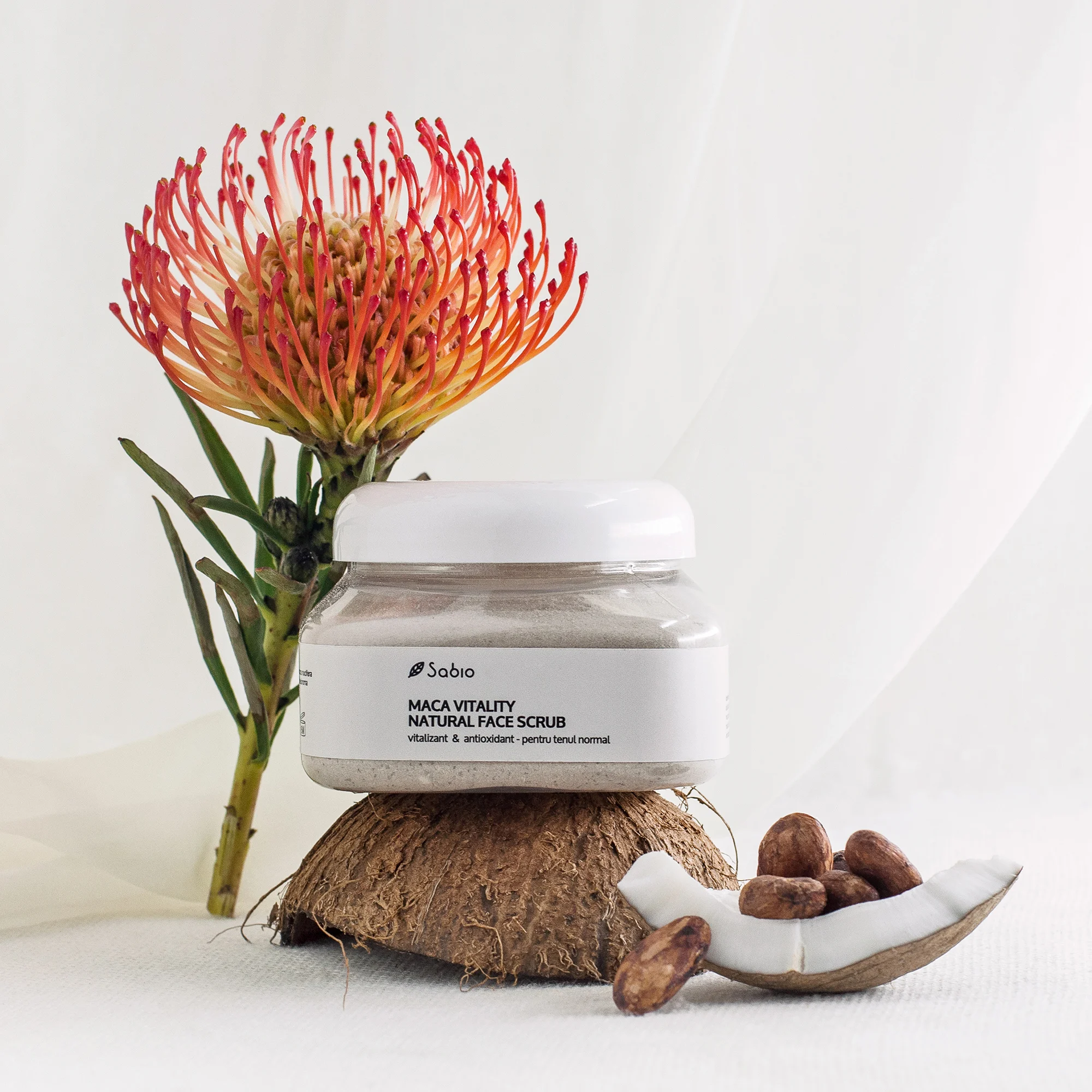
Spring is the ideal time to regenerate your skin after the cold season. Proper exfoliation helps remove dead skin cells, improves skin texture, and allows skincare products to work more effectively.
Why your skin needs exfoliation in spring
Most of us tend to apply rich, nourishing creams during winter, when the skin becomes drier. At the same time, because the skin may be more sensitive due to low temperatures, we often avoid exfoliation. The result is that we enter spring with dry, dull-looking skin. No matter how many skincare products we apply, they won’t be fully effective unless we first remove the layer of dead skin cells from the surface using 100% natural exfoliants suited to your skin type and desired results.
Benefits of facial exfoliation
Soothing acne-prone skin
It is important for people with acne-prone skin to use a deep-cleansing product at least twice a week. Products with natural ingredients can absorb excess sebum, unclog pores, and restore the skin’s natural balance. After removing dead skin cells, it is recommended to apply a lightweight moisturizing lotion.
Sabio recommendation: Facial mask for oily skin – Fuller’s Earth Clay & Vitamin C
Reducing post-acne marks
Breakouts can leave behind visible marks on the skin, sometimes at the worst possible moment. The most effective way to reduce them is exfoliation, twice a week. A 100% natural mask helps remove damaged cells and stimulates the growth of new, healthy skin tissue.
Sabio recommendation: Facial mask for oily skin – Fuller’s Earth Clay & Vitamin C
Unclogging pores
If you struggle with clogged pores, exfoliation helps clear them and remove both blackheads and whiteheads. The most common areas are the nose, chin, and forehead. A product based on activated charcoal is particularly effective in eliminating blackheads, leaving the skin cleaner and brighter.
Sabio recommendation: Solid facial soap – Activated Charcoal & Marine Minerals
Fading pigmentation spots
With age, after pregnancy, or due to hormonal changes, pigmentation spots may appear on the skin. These tend to become darker and more visible over time. Exfoliation helps by gradually reducing pigmented cells.
Sabio recommendation: Anti-spot solid facial soap – Papaya & Mango
Improving skin elasticity
If your skin is dry or dehydrated, you will quickly notice the benefits of exfoliation, as your skin becomes more elastic and radiant. After exfoliating, applying a nourishing cream helps stimulate new cell growth.
Sabio recommendation: Facial Exfoliant – Delicious Natural Face Scrub, 100% natural
Stimulating skin regeneration
During exfoliation, blood circulation and the lymphatic system are stimulated, which has multiple benefits: it supports skin regeneration, targets fatty tissues, and helps eliminate toxins. After exfoliation, the skin is in the perfect state to absorb a cream rich in natural ingredients.
Sabio recommendation: Facial Exfoliant – Maca Vitality, 100% natural
Improving skin texture
One of the immediate visible effects of deep cleansing is improved skin texture—instantly smoother and softer.
Sabio recommendation: Facial Mask – Purifying Aztec Clay, 100% natural
What to do after exfoliation
Because exfoliation stimulates blood circulation, removes toxins, and encourages new cells to surface, one of the best things you can do afterward is to drink plenty of water to support the process and hydrate your skin from within.
It is also important to apply a quality moisturizer to hydrate the skin externally.
Avoid sun exposure for 24 hours.
Frequently asked questions about spring exfoliation
Why is exfoliation important in spring?
To remove the dead skin cells accumulated during winter and support skin regeneration.
How often should you exfoliate your face?
Usually 1–2 times per week, depending on your skin type.
What should you do after exfoliation?
Apply a moisturizing cream and avoid sun exposure for a short period.

© 2012 - 2026 Sabio Cosmetics
RO30798770 - J40/12026/2012