
Skincare routine for combination skin – balancing dry and oily areas
Combination skin includes both oily and dry areas, which makes the skincare routine more complex. Products should be chosen to balance sebum without dehydrating the skin.
How to properly care for combination skin
Caring for dry or oily skin usually follows a fairly clear routine. But when you have a bit of both, things become more complicated. The good news is that we’ve created a comprehensive guide for managing combination skin.
Daily routine for combination skin
The key to caring for combination skin is balance. You need to find a way to address the needs of both dry and oily areas. It’s not easy, but here are some practical tips.
A lesser-known fact is that, in most cases, one skin type tends to dominate. If clogged pores are your main issue, oiliness is your primary concern. If only your nose has enlarged pores and the rest of your skin feels dry, then dryness is the main concern. Keep this detail in mind when building your daily routine.
Cleansing with natural products
We recommend natural products for all skin types because they offer many benefits without drawbacks—but for combination skin, this is even more important.
Cleansers with harsh chemicals will never give you the skin you want, as they tend to dry out already dry areas and make oily areas even oilier.
Sabio recommendation – Bi-Phase Cleanser – Jojoba, Vitamin E & Rose, suitable for gentle cleansing of combination skin
Toning without irritation
Most toners on the market contain alcohol, menthol, fragrance, and similar ingredients—elements that can be harmful to combination skin. Use a toner with natural ingredients to help restore the skin’s pH after cleansing while delivering nourishing benefits.
Sabio recommendation – Soothing Facial Toner – Linden, Chamomile & Aloe Vera
Balanced hydration – use a “dual-action” cream
Most moisturizers are designed either for oily or dry skin. Instead, look for a product specifically created for combination skin—one that purifies, regenerates, and soothes while also providing hydration, sebum regulation, antimicrobial and anti-acne effects, as well as protection and antioxidant support.
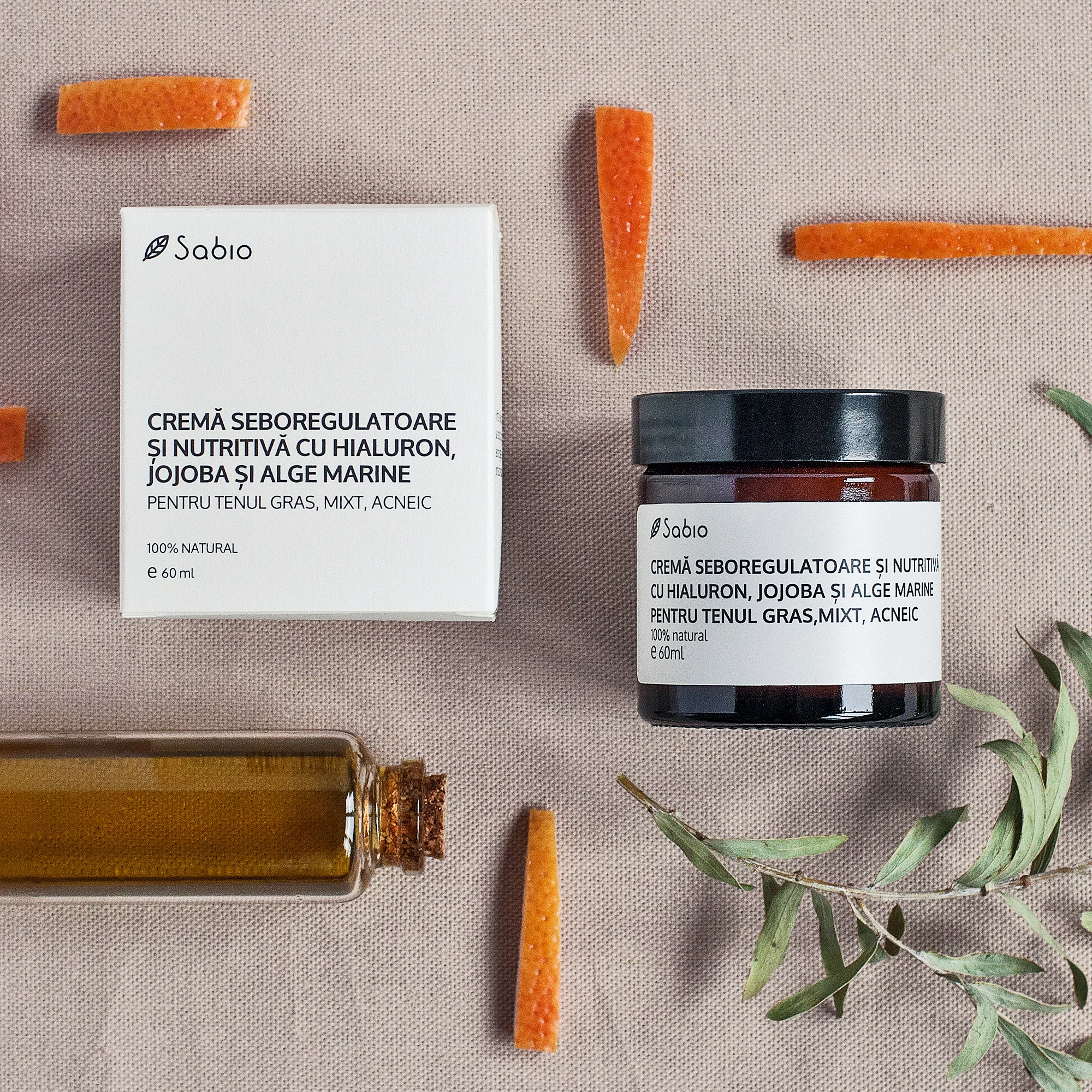
Sabio recommendation – Sebum-Regulating Cream for Oily, Combination, Acne-Prone Skin
Weekly routine for combination skin
Exfoliation
All skin types need exfoliation, and combination skin is no exception. Oily areas need it to unclog pores, while dry areas benefit from better absorption of hydrating ingredients. The key is to be gentle on the cheeks and more thorough in the T-zone.
Sabio recommendation – Facial Exfoliant – Delicious Natural Face Scrub
Nourishing mask
Choosing the right mask can be tricky for combination skin—should it absorb excess oil or provide hydration? It’s a common dilemma.
Sabio recommendation – Facial Mask – Fuller’s Earth & Vitamin C
Frequently asked questions about combination skin
What is combination skin?
Combination skin includes oily areas (usually the T-zone) along with dry or normal areas.
What products are suitable for combination skin?
Products that balance sebum without drying the skin and hydrate without clogging pores.
How often should combination skin be exfoliated?
1–2 times per week, using gentle products.

© 2012 - 2026 Sabio Cosmetics
RO30798770 - J40/12026/2012