
Reveal your radiance through exfoliation – a guide to luminous skin
As we age, the skin’s natural cell renewal process slows down, and dead skin cells need help to be removed. Otherwise, they can lead to a dull, congested complexion.
Exfoliating the skin is an essential step in any skincare routine, helping to remove dead cells and improve skin texture. When done correctly, it contributes to a brighter and more even-looking complexion.
Why exfoliation is important
If you’re ready to reveal your glow with just a few minutes of effort each week, here’s everything you need to know about exfoliating your skin for a flawless look.
Exfoliation can leave the skin more radiant and improve the effectiveness of skincare products by enhancing their absorption. When performed regularly, it can help prevent clogged pores, resulting in fewer breakouts. Over time, it may also stimulate collagen production—the key to fresh, glowing skin—while supporting elasticity and minimizing the appearance of fine lines and loss of firmness.
How often should I exfoliate my skin?
As a general rule, less is more. The goal is to gently support the skin’s natural exfoliation process so you can achieve a healthy glow. The frequency depends on your skin type:
- Sensitive skin: Exfoliate gently using a warm, damp face cloth or a mild exfoliant, once or at most twice a week.
- Oily skin: This type can tolerate more frequent exfoliation, up to five times per week.
- Normal or combination skin: Optimal results can be achieved with exfoliation up to three times per week.
- Dry skin: Exfoliate once a week and immediately apply a moisturizer to enhance results.
Which exfoliant is right for me?
- Sensitive skin: Facial Exfoliant – Delicious Natural Face Scrub
- Oily and acne-prone skin: Facial Exfoliant – Oatmeal, Almond & Green Tea, suitable for pore cleansing and acne-prone skin
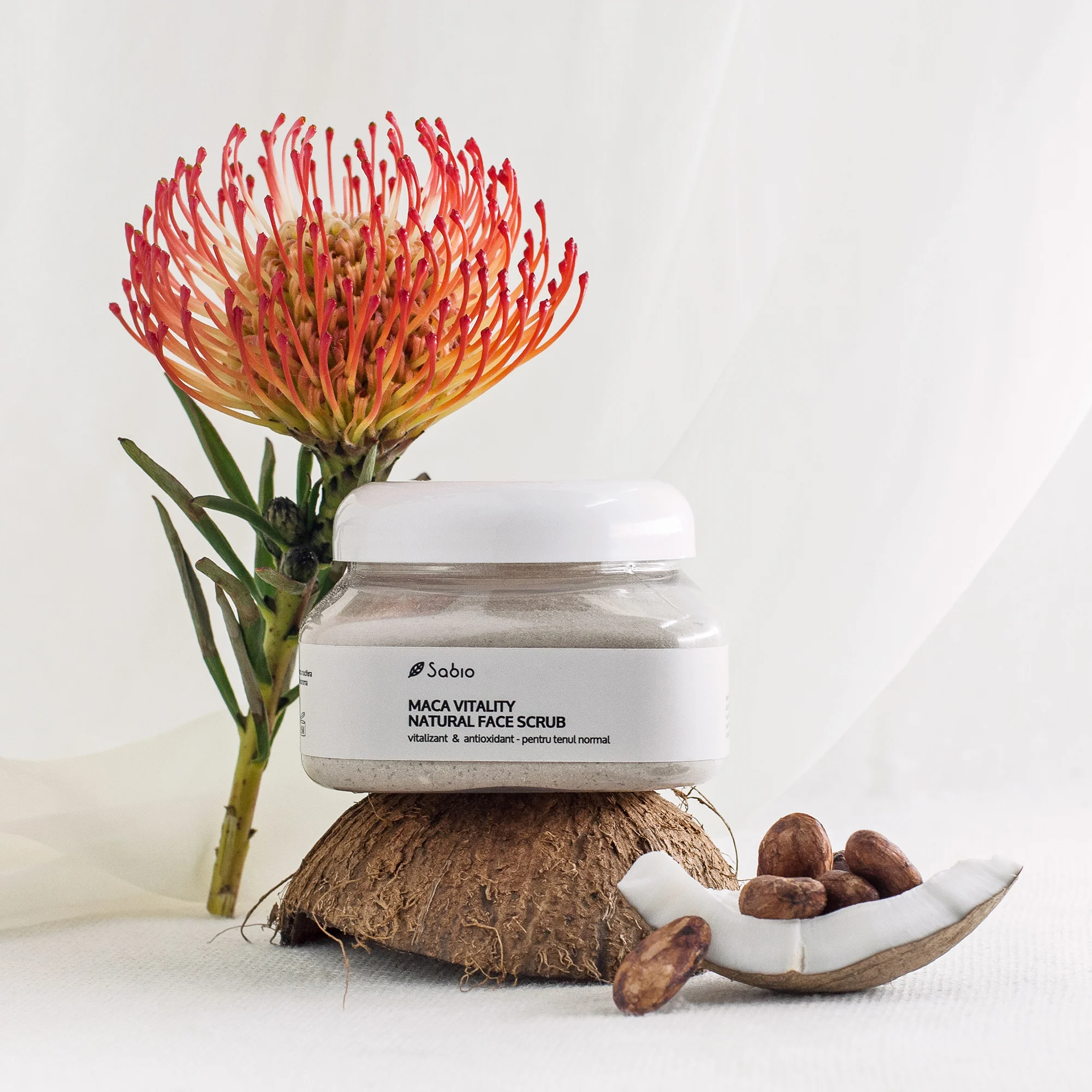
- Normal and combination skin: Facial Exfoliant – Maca Vitality, for revitalizing and brightening the skin
- Dry skin: Facial Exfoliant – Delicious Natural Face Scrub
Can I use the same exfoliant for face and body?
It is not recommended. Scrubs and exfoliating products designed for the body tend to be more abrasive than those formulated for the face. Facial skin is more delicate than the skin on areas like the arms and legs, so using body exfoliants on the face can lead to micro-tears and irritation.
Using a facial exfoliant on the body likely won’t cause harm, but it may not be strong enough to deliver the desired results.
Frequently asked questions about exfoliation
How often should I exfoliate my skin?
It depends on your skin type, but generally 1–3 times per week.
Does exfoliation help achieve a brighter complexion?
Yes, it removes dead skin cells and improves skin texture.
Can I use a body exfoliant on my face?
No, body products are more abrasive and can irritate facial skin.

© 2012 - 2026 Sabio Cosmetics
RO30798770 - J40/12026/2012